
From Hurricane to Wildfire: The Ongoing Crisis After Helene
In the aftermath of Hurricane Helene’s devastation, our community faces yet another threat: brush fires sparked by the very debris left behind by the storm. Just as Swannanoa River Road finally reopened on April 4 after a six-month closure, this new disaster struck. The massive mulch piles from the storm cleanup, still not fully cleared away, have become dangerous fuel sources.
A Resident’s Firsthand Account
A local resident who lives within walking distance of one such fire shared their experience as the situation unfolded:
“Oh man that’s a lot of fuel. I hope they can get it contained until it rains all day tomorrow.”

What many don’t realize is that these aren’t just ordinary mulch piles. As the resident explained:
“Dirty fuel too. Mulch piles from the storm are pretty contaminated. It’s caught on fire before. Mulch can produce heat as it decomposes and when it’s dry it can start burning. People actually use the heat generating abilities to keep greenhouses slightly warmer in the wintertime.”

Firetruck circled in image for scale..
While initially reporting no smoke smell from their home, they could hear the sirens of emergency responders rushing to the scene. Then, the situation worsened:
“And power just went out :/”
“I’ma be so fucking mad if the power lines burnt down.”


Later updates confirmed their fears:
“According to other people already down here a pole went down on the other side due to the fire and snapped the lines.”
As they ventured closer to get a firsthand look:
“Looks bigger in person too.”

The situation continued to escalate, with emergency communications revealing:
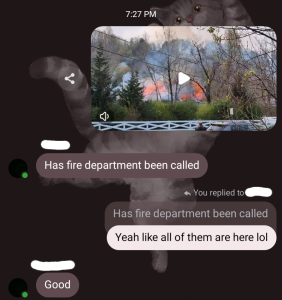
“And listening to the scanner, sounds like something is now burning at the Buncombe County landfill.”

Adding to residents’ frustrations were service providers’ responses:
“Spectrum over here fucking lying. They can’t touch that shit till Duke gets done and clears it.”
Beyond Emergency Response: The Bigger Picture
What’s happening in our community isn’t just about emergency services responding to occasional fires. We’re living through the cascading effects of climate change and insufficient disaster recovery resources.
These mulch piles should have been managed through controlled burns before they became hazards. Instead, they sit as ticking time bombs throughout our region. With spring just beginning and hotter, drier months ahead, these fires represent only the first wave of what could become a dangerous summer.
Six months after Hurricane Helene, our community continues to live in a state of ongoing crisis rather than recovery. The reopening of Swannanoa River Road offered a brief moment of progress, only to be overshadowed by new threats emerging from the remnants of the old disaster.
For those outside our area, it might be difficult to understand the compounding nature of these disasters. Natural recovery cycles have been disrupted, infrastructure remains vulnerable, and each new incident further strains already depleted resources.
Unlike a hurricane—which arrives with warning, causes destruction, and then passes—these aftermath crises continue indefinitely, often invisible to those not directly affected.
Community Resilience
Despite these ongoing challenges, our community continues to demonstrate remarkable resilience. Neighbors keep each other informed, share resources during power outages, and document these events to raise awareness about our continuing needs.
As we face the possibility of more fires from hurricane debris in the coming months, we need sustained attention and resources—not just during the initial emergency, but throughout the long, complex process of true recovery.
This post is part of a series documenting the ongoing effects of Hurricane Helene in our community. While media attention has moved elsewhere, the crisis continues for residents dealing with its aftermath.
Swannanoa River Road reopens Friday after 6-month closure from Helene damage


 English
